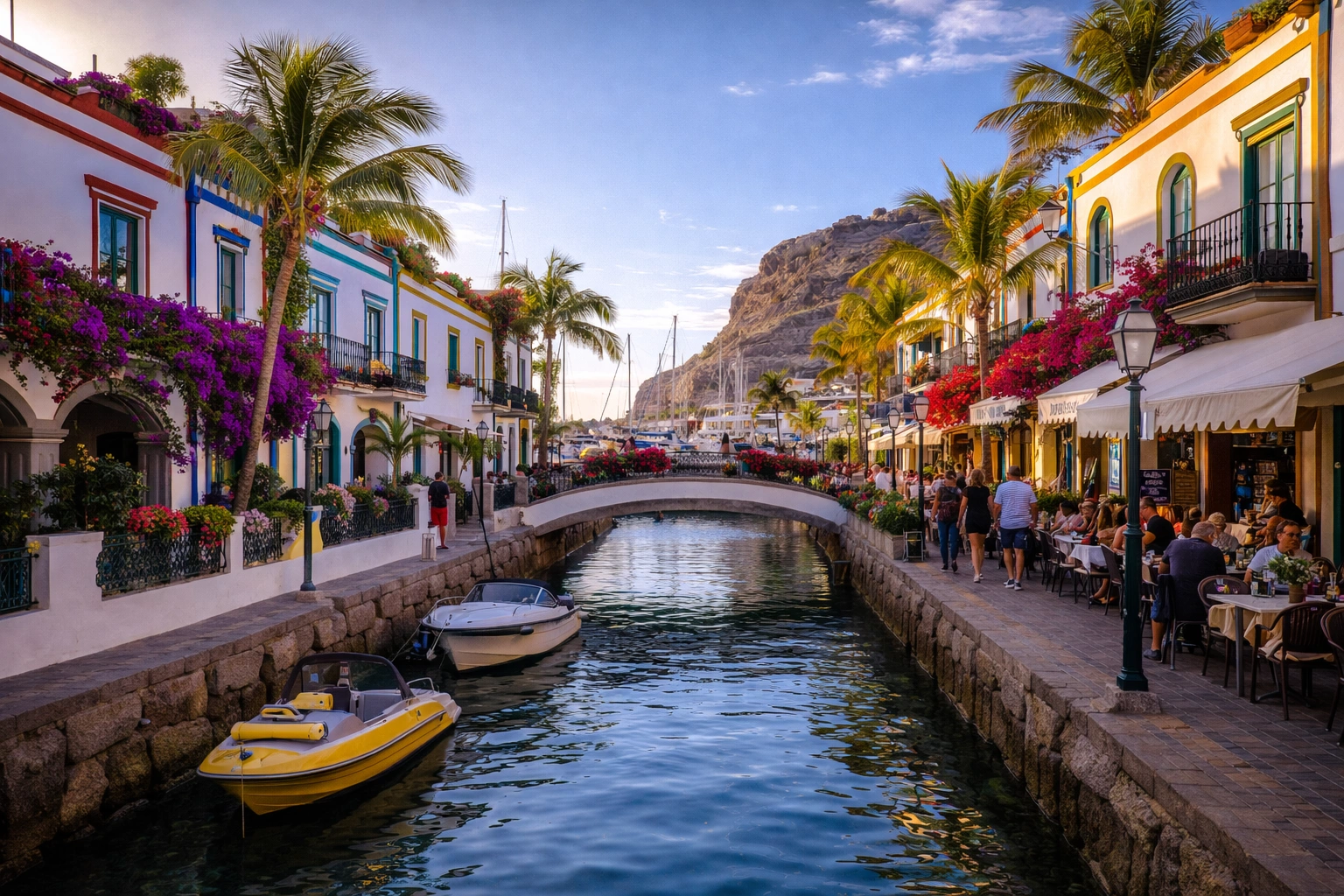
Canal Network
The network of saltwater canals connects the marina to the village, mirroring the layout of coastal settlements developed in the 1980s.
Walk the bridges at high tide for clear water views.

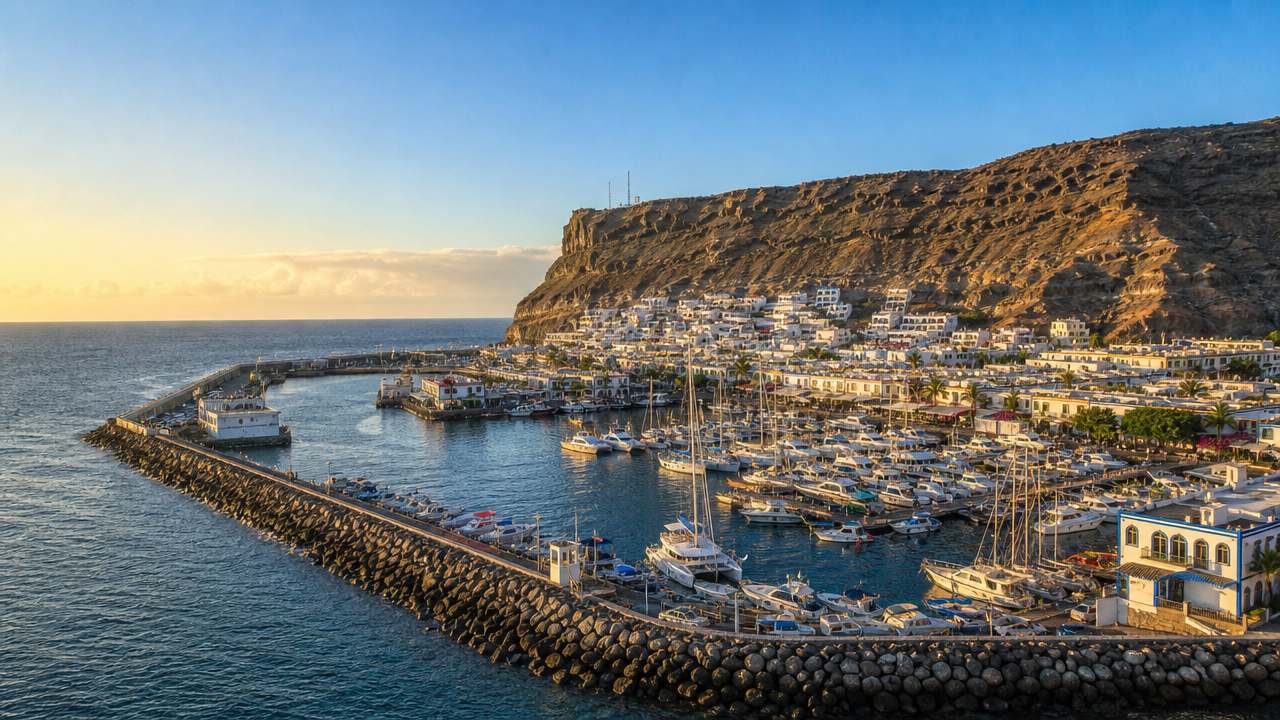
Puerto de Mogán occupies a narrow coastal valley at the mouth of the Barranco de Mogán, shielded from Atlantic winds by volcanic ridges. The settlement that exists today is younger than most visitors assume. What appears to be a centuries-old Mediterranean fishing village is largely a planned development from the late 1980s, designed with deliberate restraint in an era when much of Gran Canaria's coast was being paved over with high-rise resort blocks.
Quick answer
Puerto de Mogán's modern layout was constructed between 1983 and 1988 as a planned low-rise resort village, replacing a small fishing hamlet that had existed since the early 20th century. The marina and canal system were completed in 1988, designed by architect José Manuel Ramírez to evoke a Mediterranean fishing port while accommodating tourism infrastructure. Unlike older Canarian settlements, nearly every building you see was purpose-built within a single master plan to preserve the area's intimate scale and prevent overdevelopment.
The original hamlet of Puerto de Mogán consisted of fewer than a dozen structures clustered around a small stone pier, used primarily by fishermen working the waters off the southwest coast. Until the 1960s, the settlement was accessible only by boat or by a rough dirt track winding down from the hillside village of Mogán, four kilometers inland. Most families lived in the upper valley, descending to the harbor only when the catch required it. The transformation began in the early 1980s when local authorities and private investors recognized that the sheltered bay and consistent climate could support tourism without replicating the high-density model already dominating Maspalomas and Playa del Inglés. The Canarian government imposed strict building codes: no structure taller than three stories, no concrete block facades, and mandatory integration of traditional architectural elements like wooden balconies, terracotta roof tiles, and whitewashed walls. The canal network, inspired by similar schemes in Port Grimaud, was excavated to provide water access to interior properties while reinforcing the pedestrian character of the core. Construction proceeded in phases, with the marina basin completed first to anchor the harbor's nautical identity. By 1990, the resort had become operational, though the fishing cooperative remained active and still lands catches at the original stone quay each morning. The nickname "Little Venice" emerged in travel marketing during the mid-1990s, though the layout owes more to French and Andalusian coastal planning than to Venetian precedent. Today's Puerto de Mogán balances its engineered origins with genuine maritime activity. The working harbor coexists with the leisure marina, and the bougainvillea that drapes every archway was planted as part of the original landscape plan. The past here is not ancient, but it is intentional—a rare example of resort development that chose human scale over maximum density and has aged into something that feels organic rather than artificial.
“What appears to be a centuries-old Mediterranean fishing village is largely a planned development from the late 1980s, designed with deliberate restraint.”
Puerto de Mogán remained a modest fishing hamlet through most of the twentieth century, its coastline defined by volcanic rock and a narrow natural inlet. The settlement traces its roots to the late nineteenth century, when Canarian families established rudimentary dwellings near the mouth of the Barranco de Mogán to harvest coastal waters. By the 1950s, fewer than two hundred residents occupied simple stone houses clustered around a small pier. The economy revolved entirely around sardine and tuna fishing, with catches shipped north to Las Palmas markets. The transformation began in 1983, when regional planning authorities designated the cove for controlled tourism development. Architect José Luis Marrero led the master plan, mandating low-rise construction, strict color palettes of ochre and terracotta, and canal networks inspired by Mediterranean port towns. Between 1985 and 1992, the modern marina took shape: developers dredged the inlet to accommodate recreational yachts, installed pedestrian bridges across artificial waterways, and planted bougainvillea along whitewashed facades. Regulations capped building heights at three stories to preserve sight lines toward the surrounding ravines. The marina officially opened in 1988, shifting the local economy from subsistence fishing to leisure berthing and villa rentals. By 2000, Puerto de Mogán had become one of Gran Canaria's most photographed destinations, its engineered charm earning the nickname "Little Venice" among European tour operators. The original fishing cooperative still operates from a corner of the harbor, though most moorings now host sailboats and catamarans. Visitors today walk the same stone jetty that served working boats a century ago, now flanked by café terraces and subtropical gardens. The puerto de mogan history is visible in the layered architecture: weathered basalt foundations beneath pastel stucco, and commercial fishing nets stored alongside dive-tour equipment in the harbor's oldest warehouses.
Canarian fishing families settle near the Barranco de Mogán outlet, establishing the first permanent dwellings.
The village supports fewer than 200 residents, all reliant on sardine and tuna fishing for subsistence.
Regional authorities approve a controlled tourism development plan for the cove, prioritizing low-rise architecture.
Construction of the modern marina proceeds under strict design codes, including dredged canals and pedestrian bridges.
The Puerto de Mogán marina officially opens, introducing yacht berths and residential villa complexes.
The port gains international recognition as a designed resort destination, often marketed as "Little Venice" of the Canaries.
The architecture of Puerto de Mogán reflects its evolution from a small fishing village into a cohesive maritime community. Visitors can observe distinct design choices that prioritize low-rise construction and traditional aesthetics.
The network of saltwater canals connects the marina to the village, mirroring the layout of coastal settlements developed in the 1980s.
Walk the bridges at high tide for clear water views.
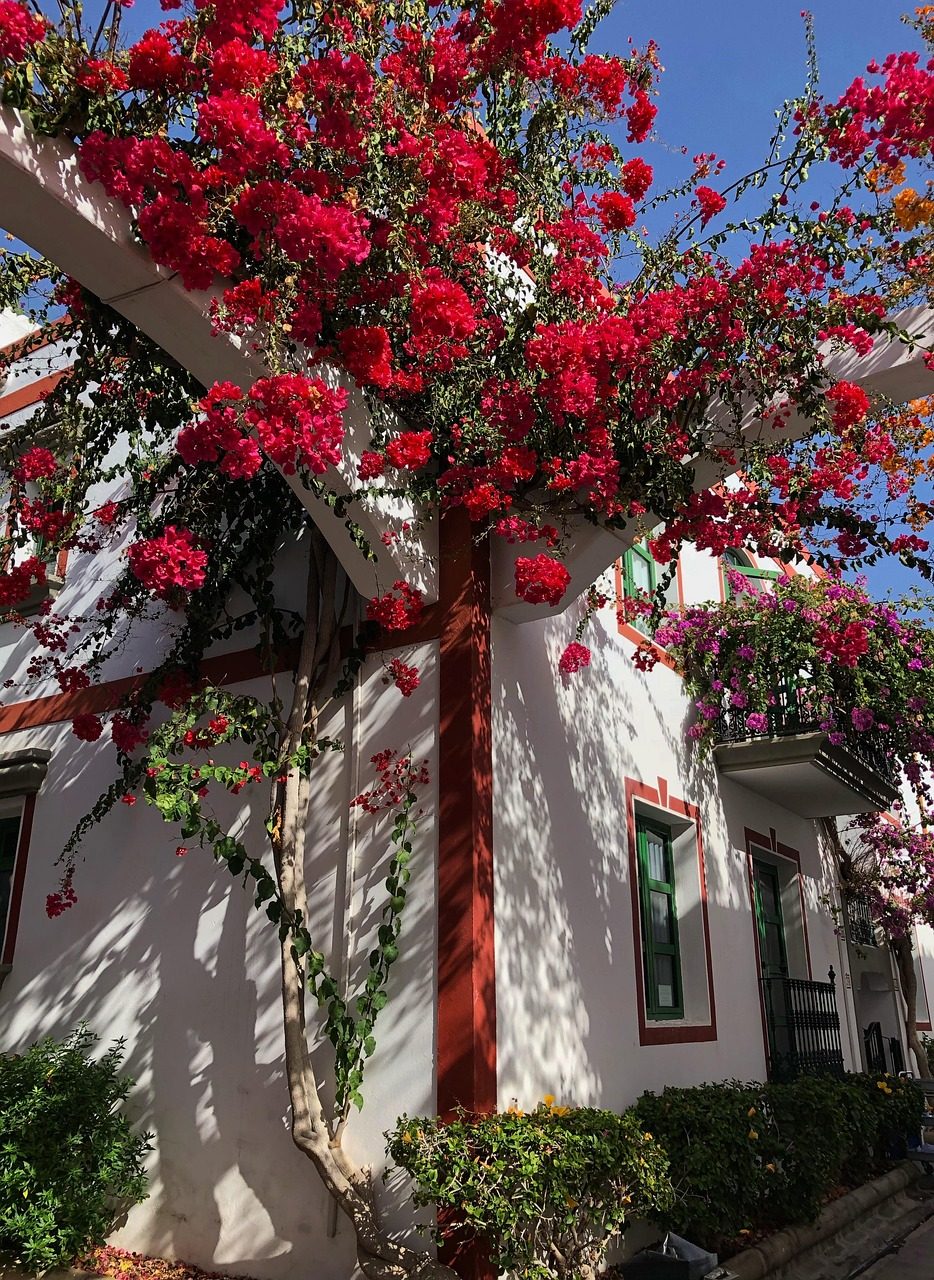
Many dwellings feature traditional white facades adorned with vibrant bougainvillea, a design standard established to maintain architectural harmony.
Observe the wall textures from the smaller residential side streets.
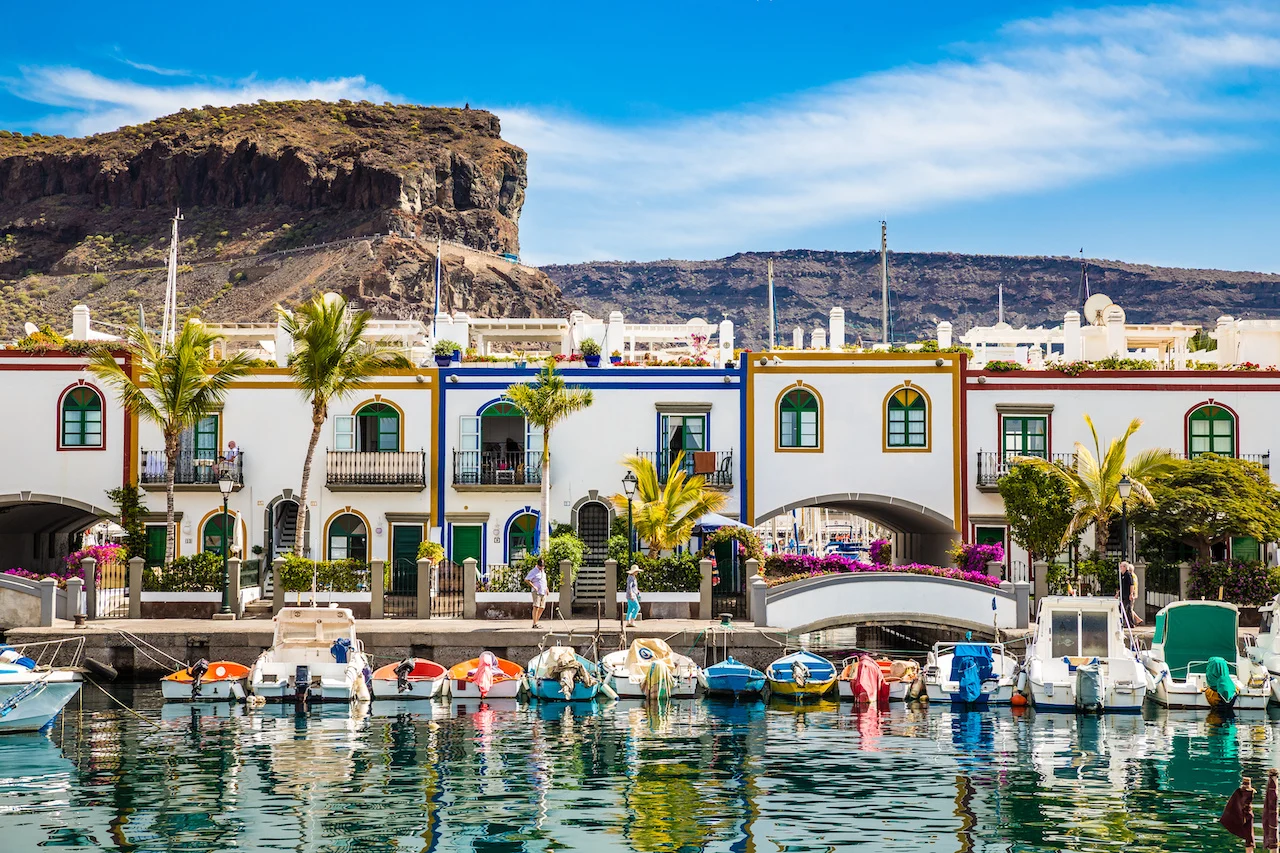
The marina functions as the modern heart of the town, designed to integrate nautical activities with the original harbor front.
Stand at the outer pier to see the village skyline.
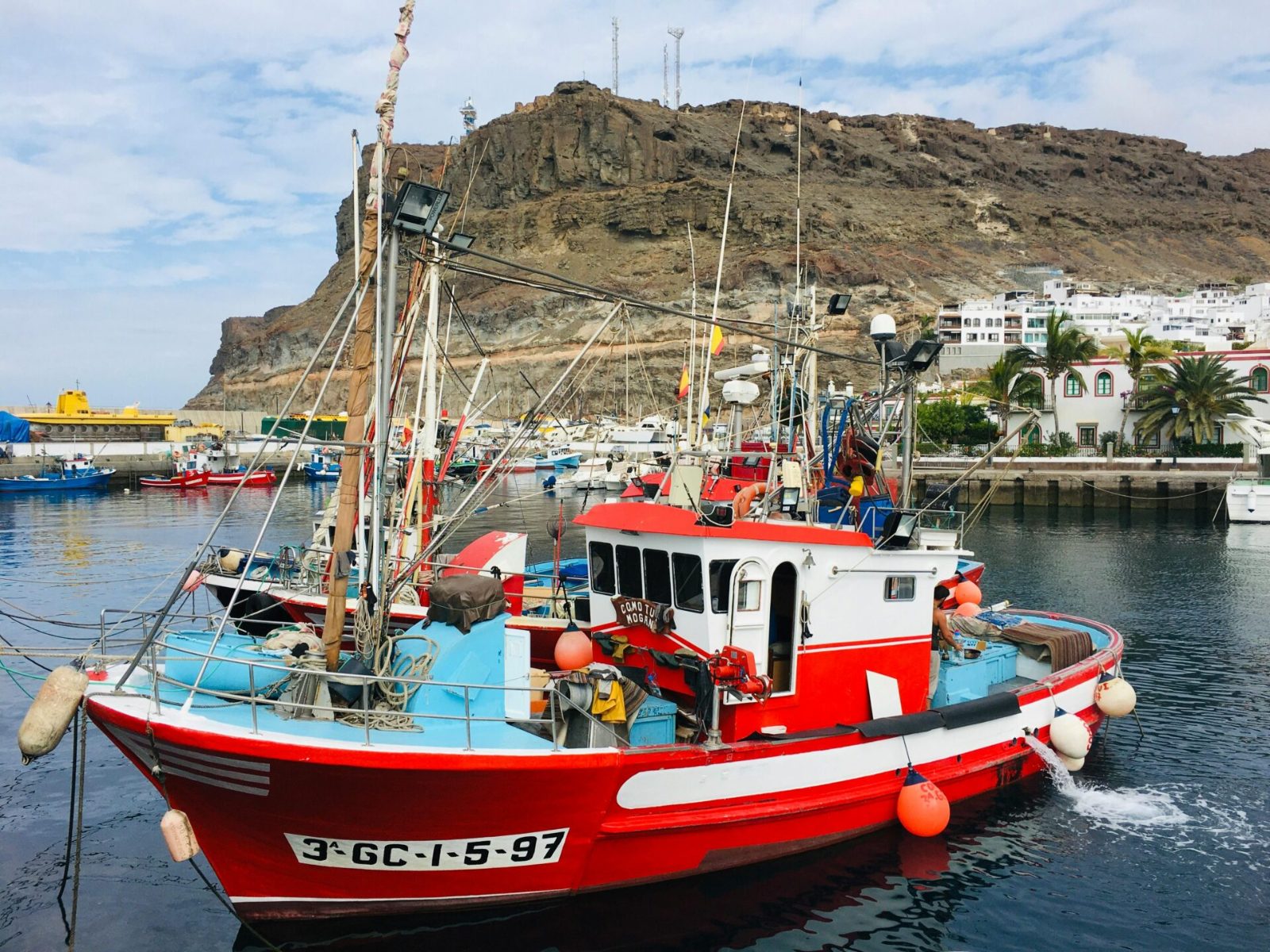
This area preserves the remnants of the town's original livelihood through the presence of traditional boats and working gear.
Visit early to see local equipment stored by the docks.
As Puerto de Mogán is an open public town and marina, visitors can explore the streets and waterfront areas at any time.
Puerto de Mogán is a public town and marina, meaning there are no entry charges for exploring the historic streets or waterfront areas. Financial planning for your visit should focus on optional activities rather than admission fees.
Verdict: A typical adult pays 0 EUR for access, though independent activities such as boat tours or submarine excursions will incur separate costs.
Everything you need to know about puerto de mogan history
The puerto de mogan history is rooted in its evolution from a quiet, traditional fishing settlement into a picturesque maritime destination. It gained prominence through the careful development of its harbor and residential architecture during the late 20th century. Local fishermen continue to maintain traditions that have been part of the puerto de mogan history for generations. Exploring the town allows visitors to see how these coastal roots remain central to the identity of this Gran Canarian landmark. Modern tourism development has integrated seamlessly with the authentic charm of the fishing harbor. While much of the infrastructure is contemporary, the layout still reflects the slow pace of historical village life. It is entirely free to walk around the open public town and marina, allowing you to observe the architecture and canals at your own pace. You can immerse yourself in the local atmosphere by visiting during the early hours, as the best arrival window is 09:00–11:00 to avoid mid-day heat and large crowds. Experiencing the submarine tour provides a unique perspective on the underwater landscape that has sustained the community throughout its existence.